TMX TMX2000-S2 Data Car Alarm Pager Nos Box TMX2000/S2
fits model: S2, 70s.
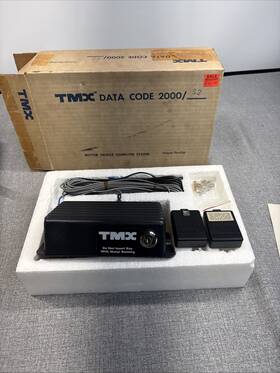
( Brand: Tmx ), ( Manufacturer Part Number: TMX2000/S2 ), ( Model: 2000/S2 ), ( Type: Car Alarm )
Review TMX 2000 /s2 Vintage Data Code Car Alarm Pager System Nos Complete In Box Tech fits S2 70S
The **TMX TMX2000/S2 Data Car Alarm with S2 Pager and NOS Box** is a rare and highly sought-after piece of automotive security technology from the late 1970s, embodying the cutting-edge innovation of its era. This system represents a sophisticated evolution in vehicle protection, combining mechanical reliability with early electronic sophistication to create a robust defense against theft and tampering. The **TMX2000/S2** was designed with a modular approach, allowing for customization and expansion, which was a hallmark of TMX s engineering prowess during the 1970s. At its core, this alarm system features a **NOS (No-Output State) box**, a critical component that ensures the system remains dormant and undetectable when the vehicle is in a secure state, preventing bypass attempts by thieves. This was a revolutionary concept at the time, as it eliminated the need for constant power draw, thus extending battery life and reducing the risk of false activations.
The **S2 pager module** is one of the most distinctive and advanced features of this system, offering a unique method of alerting the owner to unauthorized activity. Unlike traditional sirens, which could be easily disabled or ignored, the S2 pager emits a silent, coded signal that activates a separate pager device likely a small, handheld receiver carried by the owner. This discreet alert system allowed users to respond to potential theft attempts without drawing attention to themselves, making it an ideal choice for high-profile or valuable vehicles. The pager s design was compact and portable, ensuring it could be easily concealed or worn, while the alarm s internal circuitry was engineered to minimize false triggers, a common issue with earlier alarm systems.
The **TMX2000/S2** itself is built with a sturdy, industrial-grade construction, featuring a robust metal or high-quality plastic housing that protects its sensitive components from environmental factors such as moisture, dust, and temperature fluctuations. The system s wiring harness is meticulously organized, with clearly labeled connectors and a modular layout that allows for easy installation and troubleshooting. Inside, you ll find a combination of **relay-based logic circuits** and early semiconductor components, including transistors and integrated circuits, which work together to monitor the vehicle s security status. The system includes multiple sensors, such as **door ajar, hood release, and trunk lid switches**, as well as a **shock sensor** to detect impacts or forced entry, all of which trigger the alarm sequence when activated.
One of the most impressive aspects of the **TMX2000/S2** is its **NOS (No-Output State) technology**, which was a proprietary feature developed by TMX to prevent tampering. In this state, the alarm system appears inactive to any external monitoring devices, such as those used by thieves to disable alarms. The NOS box ensures that the system only activates when a genuine security breach is detected, making it nearly impossible to bypass without triggering the alarm. This feature was particularly valuable in an era when car theft was rampant, and manufacturers were constantly racing to outsmart would-be thieves with increasingly sophisticated countermeasures.
The **TMX2000/S2** also incorporates a **delayed activation feature**, allowing the owner to arm the system after starting the vehicle and driving away, reducing the risk of accidentally triggering the alarm during normal operation. This was a significant improvement over earlier alarms, which often required the vehicle to be turned off before arming, leading to inconvenience and potential missed alerts. The system s **battery backup** ensures that it remains operational even if the vehicle s electrical system is compromised, further enhancing its reliability.
Visually, the **TMX2000/S2** exudes a sense of nostalgia, with its **retro-futuristic design** that reflects the technological optimism of the 1970s. The control panel often features a combination of **rotary switches, push buttons, and LED indicators**, providing clear feedback on the system s status. The wiring and installation process were designed to be straightforward, with detailed instructions included in the original documentation, making it accessible to both professional installers and DIY enthusiasts. While the system is no longer in production, it remains a prized collectible among vintage car enthusiasts, historians of automotive technology, and those who appreciate the ingenuity of mid-century engineering.
For collectors and restorers, the **TMX2000/S2 Data Car Alarm with S2 Pager and NOS Box** is not just a functional security device but also a fascinating artifact of automotive history. Its combination of **mechanical durability, electronic innovation, and practical design** makes it a standout example of 1970s technology. Whether installed in a classic muscle car, a luxury vehicle, or preserved as a museum piece, this alarm system offers a glimpse into an era when car theft was a major concern and manufacturers were at the forefront of developing solutions to protect their customers investments. Today, it serves as both a testament to the ingenuity of its time and a reminder of how far automotive security has evolved.
### Pros and Cons of Buying a TMX TMX2000/S2 Data Car Alarm with Pager (NOS Box, 1970s)
#### **Pros:**1. **Historical and Collectible Value** The TMX TMX2000/S2 is a classic car alarm system from the 1970s, making it a sought-after item for vintage car enthusiasts and collectors. Its rarity and age contribute to its appeal, especially in the aftermarket for older vehicles.
2. **Functionality for Classic Cars** Many older cars from the 1960s 1980s were not originally equipped with modern alarm systems. This NOS (New Old Stock) unit can provide basic security features like door/window sensors, a siren, and a pager alert system, which can be useful for restoring or maintaining vintage vehicles.
3. **Simplicity and Reliability** Early alarm systems like this were designed to be straightforward, with fewer electronic components than modern alarms. If properly installed and maintained, they can be reliable for basic security purposes.
4. **Compatibility with Older Vehicles** Since this system is from the 1970s, it may be easier to integrate into older cars that lack modern electrical systems or wiring harnesses. Some enthusiasts prefer analog systems over complex digital ones for simplicity.
5. **Nostalgia Factor** For those who appreciate retro technology or enjoy restoring classic cars, owning a working 1970s alarm system can be a nostalgic and rewarding experience.
6. **Potential for Customization** Some collectors enjoy modifying or repairing vintage electronics, which can be a fun hobby. This system may offer opportunities for tinkering or restoration.
7. **Low Power Consumption** Unlike some modern alarms, older systems like this may draw less power from the vehicle s battery, reducing the risk of draining it if left armed for extended periods.
---
#### **Cons:**1. **Outdated Technology** The TMX2000/S2 relies on analog circuits and mechanical components, which are far less sophisticated than modern digital alarms. This means limited features like remote disarming, GPS tracking, or advanced sensor technology.
2. **Limited Reliability Over Time** Even if the unit is NOS, it may have been stored for decades, leading to potential issues like corroded contacts, dried-out capacitors, or degraded wiring. Testing and restoration may be required before use.
3. **No Modern Safety Features** Modern alarms include features like rolling code technology (to prevent signal cloning), motion sensors, and integration with smart home systems. This system lacks such advancements, making it less secure by today s standards.
4. **Difficulty in Installation** Older wiring and electrical systems in vintage cars may not be compatible with modern or even mid-century alarm systems. Retrofitting could require significant modifications or a skilled electrician.
5. **No Long-Term Support or Updates** Unlike modern alarms, which receive firmware updates or manufacturer support, this system cannot be upgraded or serviced by the original manufacturer. Any issues would require DIY troubleshooting.
6. **Potential for Theft or Tampering** The pager alert system (a key component of this alarm) can be bypassed or disabled by determined thieves. Modern alarms use more secure methods to prevent such vulnerabilities.
7. **High Cost Relative to Functionality** Given its age and rarity, a NOS TMX2000/S2 may be expensive compared to its limited functionality. For a modern alarm with similar basic features, you could get a much more capable system for a fraction of the cost.
8. **Environmental and Legal Considerations** Some modern vehicles or insurance companies may not recognize or approve the use of vintage alarm systems, potentially voiding warranties or insurance coverage.
9. **No Remote Control Options** The pager system relies on a separate device (the pager) to alert the owner, which is less convenient than a smartphone app or remote fob. Modern alarms allow for remote arming/disarming via Bluetooth or Wi-Fi.
10. **Risk of Damage to Vehicle** Improper installation or wiring errors could damage the car s electrical system, leading to costly repairs.
---
### **Conclusion:**Buying a TMX TMX2000/S2 Data Car Alarm from the 1970s is primarily a decision driven by nostalgia, collectibility, or a passion for vintage automotive technology. While it offers a unique piece of automotive history and can provide basic security for older vehicles, its limitations in reliability, functionality, and safety make it impractical for modern use. It is not a practical choice for everyday security needs but may appeal to enthusiasts who prioritize authenticity and the challenge of restoring or using retro technology.
---
### **Recommendation:**- **For Collectors or Enthusiasts:** If you are passionate about vintage car restoration or electronics, purchasing this alarm could be a rewarding hobby. Ensure you thoroughly test and restore it before use, and consider pairing it with a modern alarm for added security.
- **For Practical Use:** Do not rely solely on this system for modern security needs. Instead, pair it with a contemporary alarm system that offers rolling code technology, remote control, and advanced sensors. If you only need basic security for a classic car, research modern alarms designed for vintage vehicles that balance functionality and compatibility.
- **For Budget-Conscious Buyers:** If you are looking for a simple, low-cost alarm for an older car, consider newer analog or digital alarms that offer better reliability and features at a lower price than a NOS 1970s unit.
- **For Investment Purposes:** If you intend to resell the alarm, research the market demand for vintage TMX systems. Prices can vary widely, and the resale value may not justify the purchase cost unless you are targeting a niche audience of collectors.
Ultimately, this alarm is best suited for those who appreciate its historical significance and are willing to accept its limitations. For everyday use, modern alternatives are far superior in both performance and convenience.
Details:
Vintage TMX Data Code Car Alarm 2 Pager System NOS Complete In Box 70S Tech.
part #: tmx2000 prices
- $174.99-$300.00
specifications carsecurityi:
- for models: S2, 70s
- brand: Tmx
- mpn: Tmx2000/s2
- model: 2000/s2
- type: Car Alarm
general carsecurityi:
- Vehicle Electronics GPS > Car Alarms Security > Car Alarms Security Systems
- condition: New
seller carsecurityi:
- # reviews: 5695
- city: Louisville, Kentucky
- rating: 99.4%
returns carsecurityi:
- method: Money back
- paid by: Seller
- time: 30 Days
- policy: Returns Accepted
shipping carsecurityi:
- type: Fixed
- carrier: USPS
- class: Standard
- cost: $10.00
- transit: 3-8 Days
- service: USPS Ground Advantage
payments carsecurityi:
- credit card: Discover
- other
- wallet: Google-pay
offer carsecurityi:
- availability: In Stock
- quantity: 1
- sold: 0
- options: Ship-to-home
- started: May 20, 2026
- best offers: True
Tmx TMX2000 Is Similar To:
- Tmx Tmx s1 Vintage Data Code Car Alarm S1 Pager System Nos Complete In Box 70s Tech (95.3% similar) Vintage Tmx data code car alarm 2 pager system nos complete in box 70S tech...(May 19th, 2026)